

Energy · A decade of research · 6 years of building
Energynet
The world's first transactive energy operating system.
- Fractal Architecture
- Distributed Systems
- Platform Engineering
- Simulation
- Product Design
The grid was built as one large, fragile, centralized system.
The Grid Crisis
The power grid was built as one large, fragile, centralized system. The grid cannot absorb renewable sources at scale, because their output is intermittent, destabilizing, and expensive to integrate. The grid does not have the power for electric vehicles at scale. Power is lost every time it is transmitted over distance and stepped through transformers. Large power storage is unaffordable. Eliminating large base generators further destabilized the grid. Because the grid is centralized, it is exposed to attack, both physical (kinetic) and cyber.
Microgrids
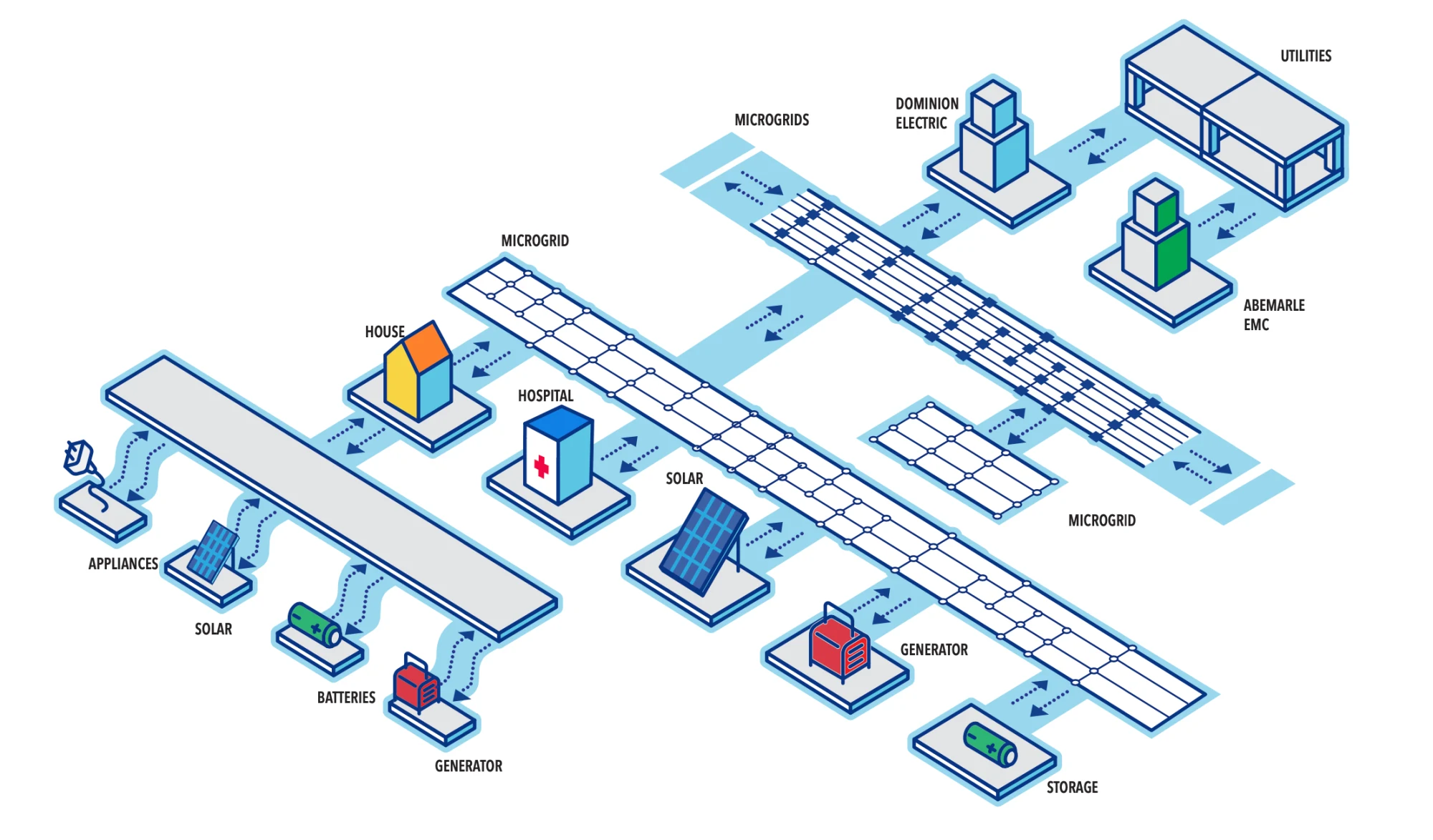
The solution is to produce, store, and manage power close to where it is used. A microgrid does exactly that. The goal is resilience: maintaining an acceptable standard of living even as the wider grid and economy decline. Microgrids should mutually support each other to reduce the cost of resilience. Managing a microgrid is difficult, managing the interactions between microgrids doubly so. Until now no management solution existed.
Transactive Energy
Transactive Energy uses markets instead of central control to manage power systems. Each participant - a home, a building, a data center - can both use power and produce it. Participants have unique needs, policies, and preferences. Participants decide when to buy and sell power among themselves. A market determines the price and quantity. The market does a better job than central control allocating power over time.
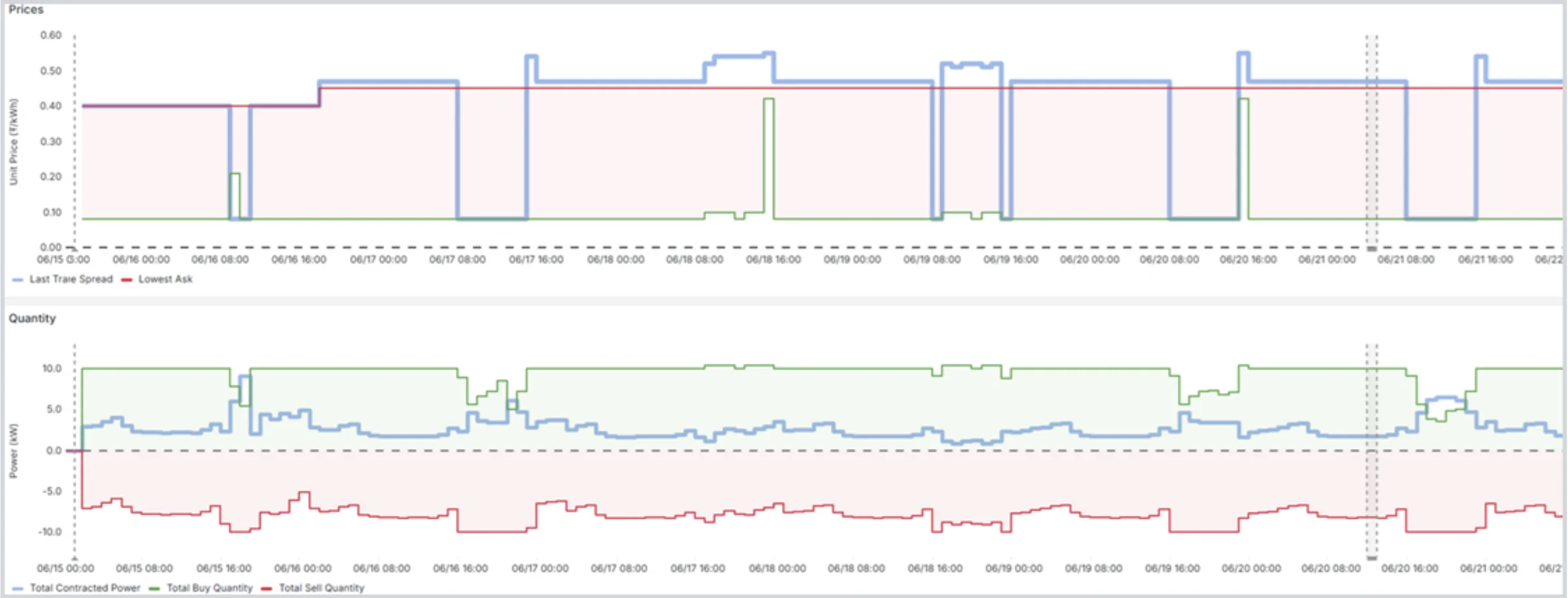
When local power is scarce, the price rises, so participants use less or sell what participants have. When local power is plentiful, the price falls, so participants use more or buy to store. Each participant acts on its own, in real time and for the future; the result is a microgrid that balances itself.
Gallery view
The images do the talking. Swipe or drag.
Meet the Energynet
The First Transactive Energy Operating System
- The Energynet operates markets in time, so participants both respond to real-time supply & demand and plan ahead.
- The Energynet interoperates with the existing grid and can even support the grid.
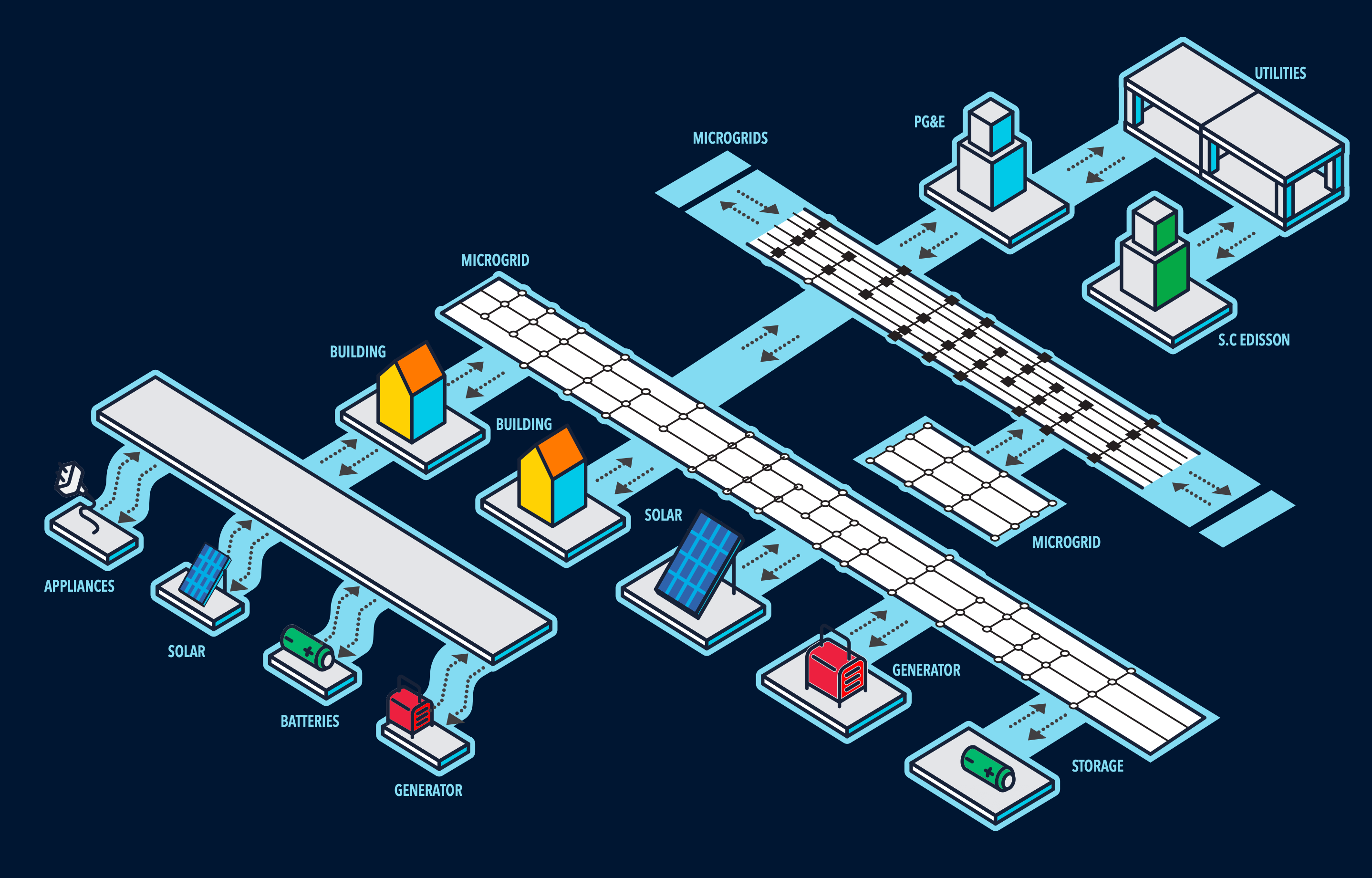
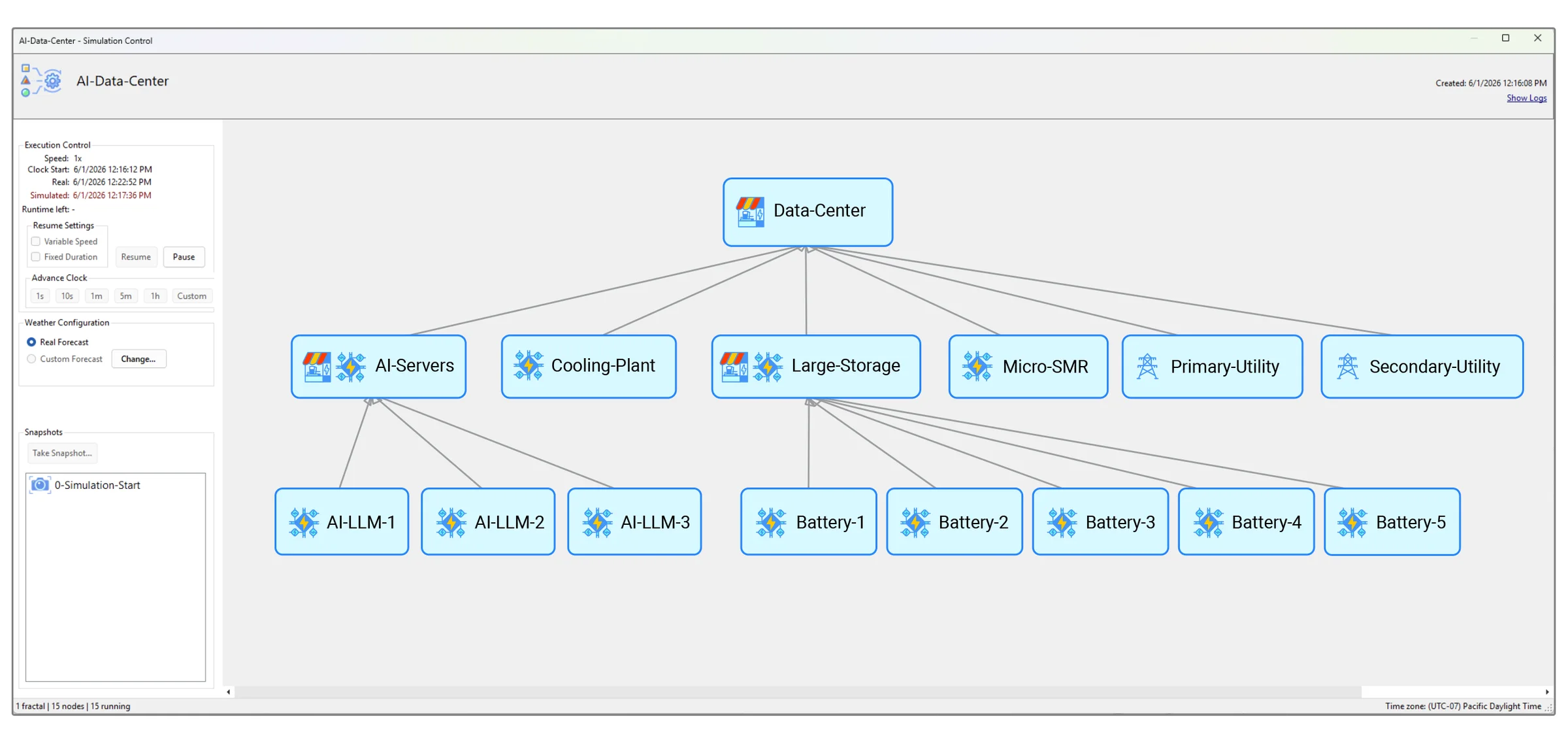
- The Energynet is a fractal of microgrids, managing devices, buildings, towns, and countries.
- The Energynet is completely autonomous, managing power based on the operator’s policies and preferences.
Power Management
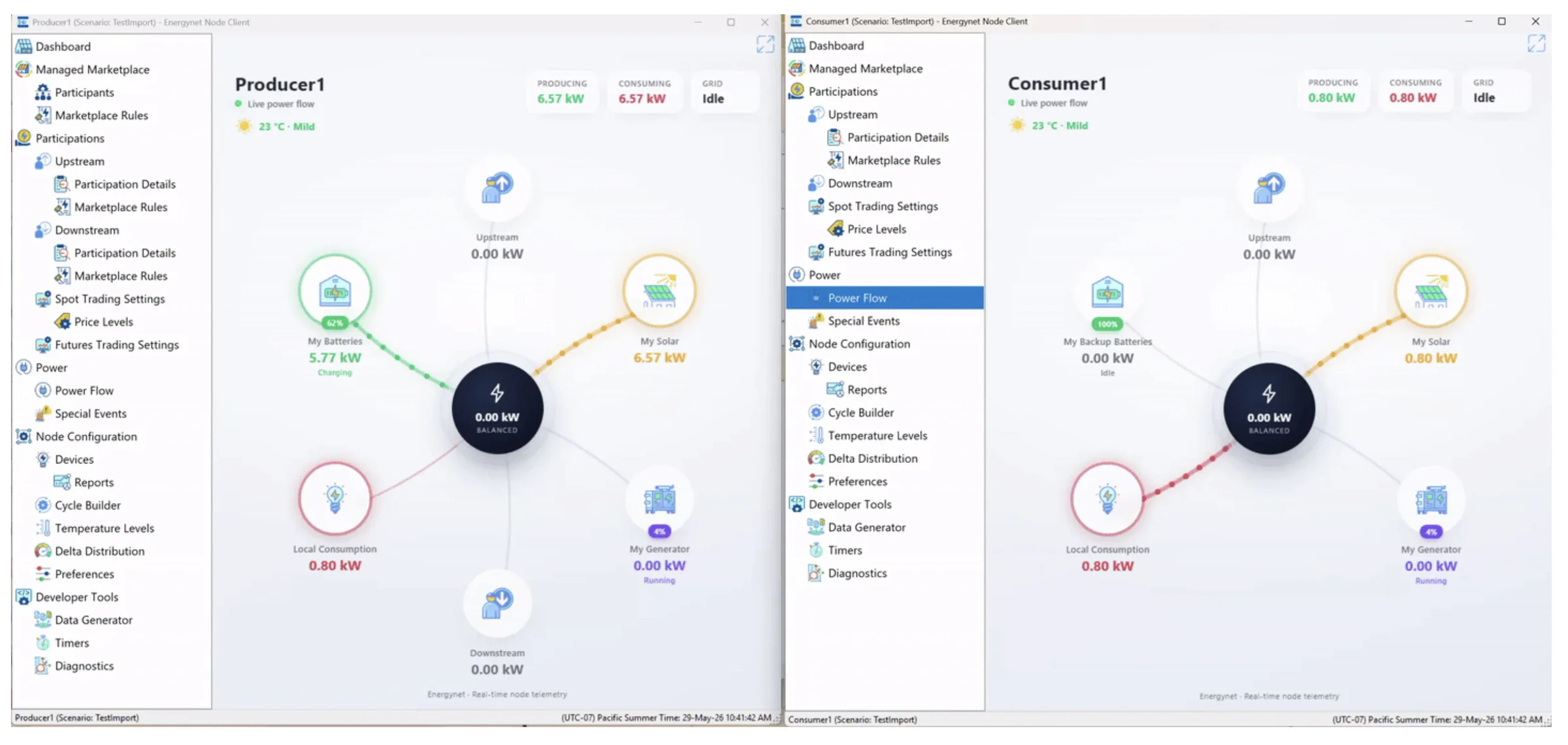
An Energynet node
A node is a set of load, storage, and production devices. It can be a single device, a building, or a group of other nodes forming a microgrid. Nodes trade power with other nodes in the same microgrid.
Microgrids and local markets
Microgrids are also nodes: they trade with other nodes in exactly the same way. The local market sets the price of power now and in the future, and each node manages its power by responding in real time to availability and price.
Balancing supply, demand, and cost
At any moment, a node can sell excess power, consume power normally, or reduce consumption when power is scarce and prices are high. It manages its devices according to the power it has already purchased, the current market price, the devices it needs to operate, and local production.
Each node continuously compares its own cost of producing power with the market price, both now and in the future. That calculation accounts for the true cost of ownership, the time of production, and the environment. It provides the basis for pricing every purchase and sale.
Responding to power shortages
When consumption must fall, Energynet calculates a mix of load and production devices in real time. It simulates how reducing load will affect the market, then uses the operator’s policies to decide how best to respond. During shortages, it distributes available power according to each node’s priority and commitments.
Control through operator policies
Operators can add, schedule, and prioritize events, set charging and discharging policies, and define special events such as island mode. These policies guide how each node responds as conditions change.
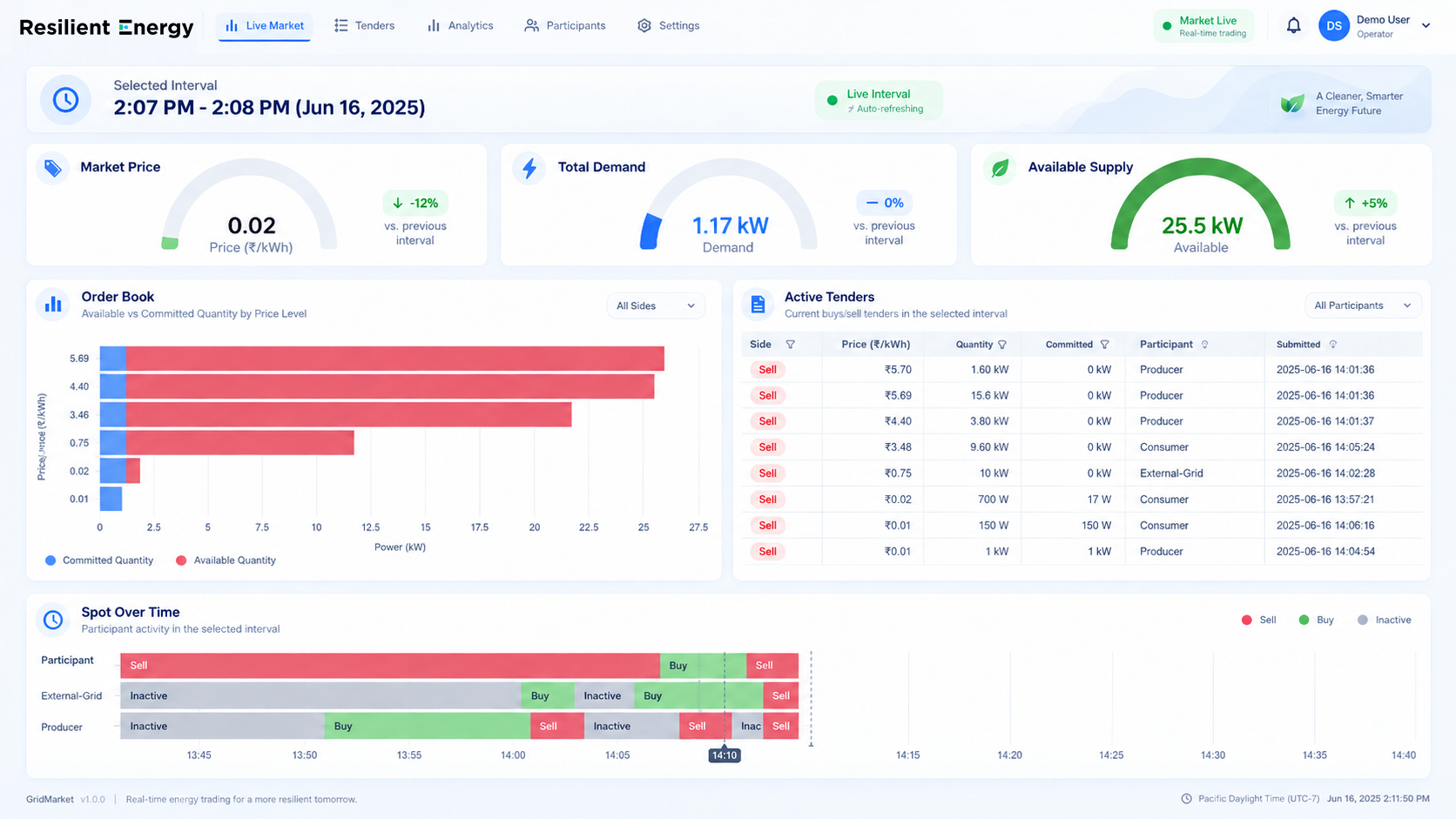
Spot market: Live price, demand, and the order book for immediate trades
So Energynet replaces central control with markets. Every node buys and sells its own power.
Nodes trade in real time and for the days ahead. When power is scarce the price rises, and the microgrid balances itself.
A node can be a device, a building, a town. The system is a fractal of microgrids, from a single appliance to the national grid.
Each level is an island of stability. It holds when the wider grid is under stress, and in aggregate the islands stabilize the grid itself.
Managing a microgrid is difficult. Managing the interactions between microgrids is doubly so. Until now no management solution existed.
Resilient Energy · Energynet